



Quick Summary
Your content is ready and links are building, but your website still isn't ranking. The culprit is likely a hidden technical issue. This simple guide cuts through the complexity to show you the five foundational pillars that control your site's search engine fate.
Table of Contents
Understanding Technical SEO: More Than Just a Checklist
Think of your website like a storefront. Technical SEO isn't about polishing the window display (that's content); it’s about ensuring the door is unlocked, the lights are on, the aisles are clear, and the floor is stable for customers. It's the essential infrastructure that allows search engines to find, understand, and confidently recommend your site to users.
The Five Pillars of Foundational Technical SEO
Forget overwhelming audit reports. Focus on mastering these five core areas.

1. Accessibility: Can Search Engines Get In?
If Google can't access your pages, nothing else matters.
The Gatekeeper (robots.txt): This is a simple text file that gives instructions. One wrong line can accidentally lock search engines out of entire sections of your site.
Your Site Map (XML Sitemap): This is a guided tour you provide to Google, highlighting your most important pages. Keep it clean and focused on pages you actually want to rank.
Crawl Efficiency: For larger sites, Google has a limited "crawl budget." Ensure it spends time on your valuable content, not crawling millions of low-value filter pages or broken links.
The Gatekeeper (robots.txt): This is a simple text file that gives instructions. One wrong line can accidentally lock search engines out of entire sections of your site.
Your Site Map (XML Sitemap): This is a guided tour you provide to Google, highlighting your most important pages. Keep it clean and focused on pages you actually want to rank.
Crawl Efficiency: For larger sites, Google has a limited "crawl budget." Ensure it spends time on your valuable content, not crawling millions of low-value filter pages or broken links.

2. Structure & Navigation: Is Your Site Easy to Explore?
A logical structure guides both users and Google’s bots.
Internal Linking: These are the pathways that connect your content. A crucial page with no links pointing to it is like a hidden room no one can find it. Strategically link to your key pages from high-authority areas like your blog or homepage.
Clean, Logical URLs: A URL like /services/website-design is clear. A URL filled with question marks, numbers, and session IDs is confusing and can create duplicate content issues.
Internal Linking: These are the pathways that connect your content. A crucial page with no links pointing to it is like a hidden room no one can find it. Strategically link to your key pages from high-authority areas like your blog or homepage.
Clean, Logical URLs: A URL like /services/website-design is clear. A URL filled with question marks, numbers, and session IDs is confusing and can create duplicate content issues.

3. Page Experience: Is Your Site Fast and Stable?
Speed and user experience are direct ranking factors.
Loading Speed (LCP): This measures how long it takes for the main content to load. Large, unoptimized images are the most common culprit.
Visual Stability (CLS): Does text or images shift as the page loads? This happens when ads, images, or fonts don't have reserved space, creating a frustrating user experience.
Interactivity (INP): After the page loads, does it respond quickly to clicks, taps, or key presses? Heavy, unoptimized JavaScript is often to blame for lag.
Loading Speed (LCP): This measures how long it takes for the main content to load. Large, unoptimized images are the most common culprit.
Visual Stability (CLS): Does text or images shift as the page loads? This happens when ads, images, or fonts don't have reserved space, creating a frustrating user experience.
Interactivity (INP): After the page loads, does it respond quickly to clicks, taps, or key presses? Heavy, unoptimized JavaScript is often to blame for lag.

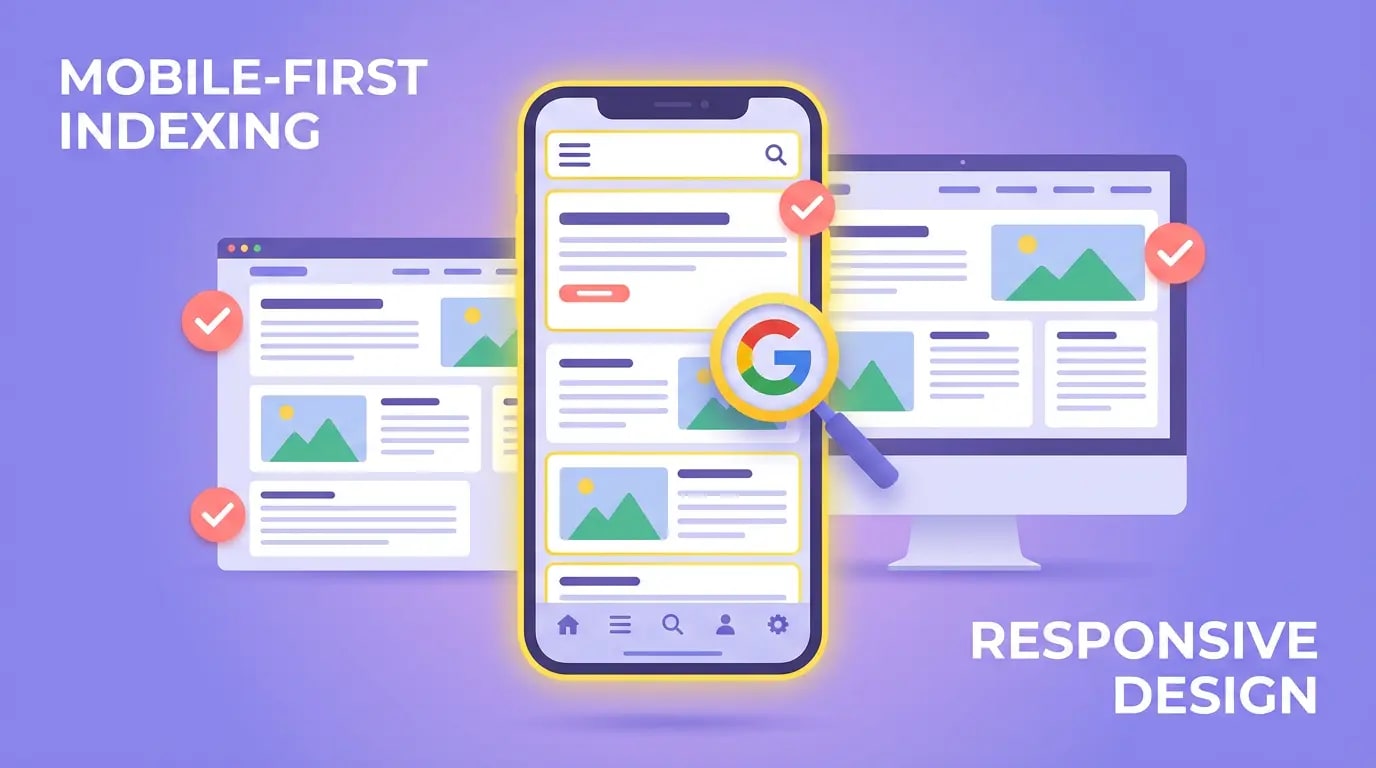
4. Mobile-First Reality: Does Your Phone Version Work Perfectly?
Google primarily uses the mobile version of your site for ranking.
Content Parity: The text, images, and links must be identical on mobile and desktop. Don't hide content on mobile.
Responsive Design: Your site should fluidly adapt to any screen size. Avoid separate "m." mobile sites, which create technical complexity and duplicate content headaches.
Content Parity: The text, images, and links must be identical on mobile and desktop. Don't hide content on mobile.
Responsive Design: Your site should fluidly adapt to any screen size. Avoid separate "m." mobile sites, which create technical complexity and duplicate content headaches.
5. Core Health & Security: Is Your Site Trustworthy?
These are the basic standards for a modern, credible website.
HTTPS Security: The padlock icon in the address bar is non-negotiable. It protects user data and is a baseline signal of quality to Google.
Duplicate Content: Having the same page accessible via multiple URLs (like with/without www) confuses Google about which one to rank. Use canonical tags to specify the "main" version.
Error Management: Regularly fix broken links (404 errors) by redirecting them to relevant, live content. An accumulation of errors signals neglect.
HTTPS Security: The padlock icon in the address bar is non-negotiable. It protects user data and is a baseline signal of quality to Google.
Duplicate Content: Having the same page accessible via multiple URLs (like with/without www) confuses Google about which one to rank. Use canonical tags to specify the "main" version.
Error Management: Regularly fix broken links (404 errors) by redirecting them to relevant, live content. An accumulation of errors signals neglect.

Bridging the Knowledge Gap: Expertise When You Need It
Technical SEO sits at the intersection of marketing and web development. For many agencies, building this deep, specialized expertise in-house isn't practical. This is where a strategic partnership can be invaluable, allowing you to ensure every client site has a flawless technical foundation without the overhead.
By mastering these five pillars, you shift from chasing minor warnings to solving the major barriers that unlock sustainable organic growth. It’s the difference between a site that struggles and a site that ranks.
By mastering these five pillars, you shift from chasing minor warnings to solving the major barriers that unlock sustainable organic growth. It’s the difference between a site that struggles and a site that ranks.
FAQ
What is the main goal of a Technical SEO audit?
The primary goal is to identify and remove barriers that prevent search engines from crawling, indexing, and understanding your website. It's less about a perfect score and more about ensuring smooth access and clear site structure.
How is Technical SEO different from On-Page SEO?
Technical SEO focuses on the website's infrastructure—its speed, accessibility, and mobile-friendliness. On-Page SEO focuses on optimizing the content itself—keywords, headings, and meta tags—on individual pages. You need both for success.
Can good Technical SEO fix low rankings alone?
While essential, technical SEO is a foundation. It removes obstacles and creates the conditions for your great content to rank. It works hand-in-hand with strong content and a solid backlink profile.
My site is small. Do I still need to worry about this?
Yes, but focus on the fundamentals: ensure your site is secure (HTTPS), loads quickly, especially on mobile, and that all your key pages are accessible to Google. The core principles are the same for all sites.
What are the first three things I should check?
Mobile Usability: Use Google's free Mobile-Friendly Test tool.
Page Speed: Run a report in Google PageSpeed Insights.
Index Coverage: Check the "Indexing" section in Google Search Console for errors.
Where can I learn more about professional technical SEO support?
For agencies looking to ensure their clients have a bulletproof technical foundation, explore the specialized technical SEO services offered by BrandingBeez. A specialist partner can provide the deep expertise needed to audit and fix complex issues efficiently.
The primary goal is to identify and remove barriers that prevent search engines from crawling, indexing, and understanding your website. It's less about a perfect score and more about ensuring smooth access and clear site structure.
How is Technical SEO different from On-Page SEO?
Technical SEO focuses on the website's infrastructure—its speed, accessibility, and mobile-friendliness. On-Page SEO focuses on optimizing the content itself—keywords, headings, and meta tags—on individual pages. You need both for success.
Can good Technical SEO fix low rankings alone?
While essential, technical SEO is a foundation. It removes obstacles and creates the conditions for your great content to rank. It works hand-in-hand with strong content and a solid backlink profile.
My site is small. Do I still need to worry about this?
Yes, but focus on the fundamentals: ensure your site is secure (HTTPS), loads quickly, especially on mobile, and that all your key pages are accessible to Google. The core principles are the same for all sites.
What are the first three things I should check?
Mobile Usability: Use Google's free Mobile-Friendly Test tool.
Page Speed: Run a report in Google PageSpeed Insights.
Index Coverage: Check the "Indexing" section in Google Search Console for errors.
Where can I learn more about professional technical SEO support?
For agencies looking to ensure their clients have a bulletproof technical foundation, explore the specialized technical SEO services offered by BrandingBeez. A specialist partner can provide the deep expertise needed to audit and fix complex issues efficiently.
Ready to Get Started?
Contact our expert team to discuss how we can help grow your business with proven digital marketing strategies.